 |
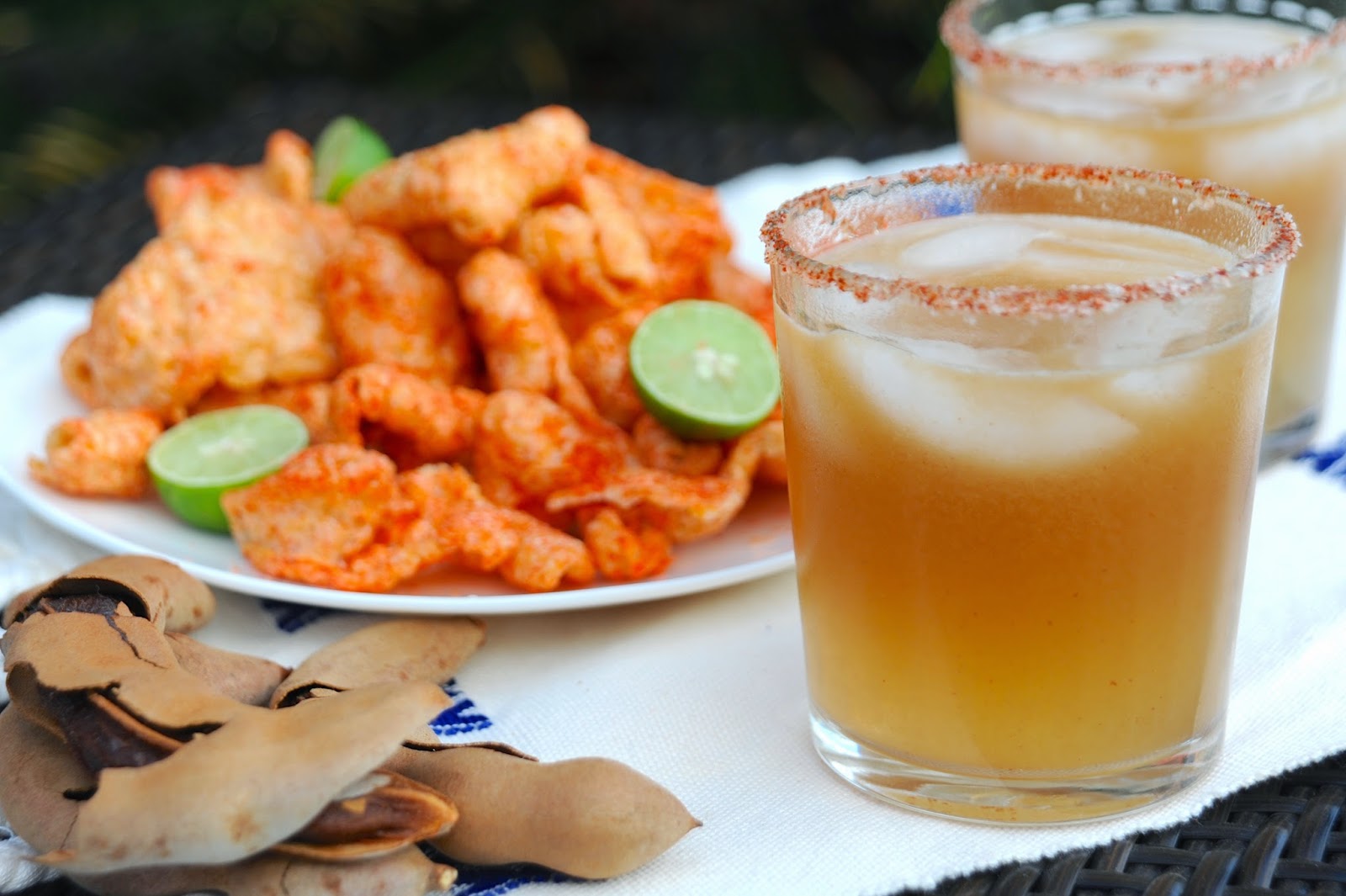
| Tamarind Margarita Photo by Leticia Alaniz © 2015 |
Tamarind has a very rich legacy in Mexico, but it traveled a long way from tropical Africa and made it’s way into southern India before it reached the Realm of The New Spain. It was the Arabs who then carried tamarind pods from India and introduced it to ancient Persia, now known as Iran, the Gulf region, and even back to Egypt. Pulp from the pods was dried, made into paste, syrups, used in cooking and for medicinal purposes.
Like all riches, especially those we can eat, tamarind reached Europe in medieval times, introduced by the Arabs. The journey continued until the indehiscent legume (a legume that does not split open when ripe) finally arrived in Mexico, brought over during the colonization by the Spaniards. The tamarind tree was soon cultivated with much success in the hot tropical states of Michoacán, Guerrero, Oaxaca and Chiapas.

Growing up, especially during festive occasions, there were always many sweet, savory, spicy and tangy candies made with tamarind pulp. There were those that came in little pots shaped like a jarrito, or the clay pots used to slow-cook beans and other delicacies. The varieties are in the thousands, but another one of my favorites was a flat laminate-shaped tamarind paste called Pulparindo. Then there are the all famous diablitos or little devils, aptly named because they are shaped like a small stone, it looks black, it is so sour and as many mexican candies, it is covered in lots of dried chile, salt and sugar and it makes your mouth water bringing out the inner child. I don’t know why they are called diablitos, but I used to think it was because only the devil could be brave enough to eat those!
Even the little ones start eating tamarind with chile at an early age. In order for their their little hands to hold a sweet and sour tamarind candy, there are the cucharitas, little spoons with the tamarind dried on and covered with sugar. The sourness tickles their little tongues and they make cute, puckering faces as they eat them!
 All types of Mexican savory dishes are prepared with tamarind pulp. A loin in a rich tamarind sauce is one of my favorites. Grilled fish or other types of seafood fare well too. A velvety thick tamarind sauce called chamoy, is also used in a variety of ways. It is poured over shaved ice, especially delicious in the hot summer. It is made into paletas or popsickles, and it is cleverly drizzled to coat the inside of a glass, right before an icy cold beer is poured. It takes everything to another dimension.
Below is classic Margarita made with the pulp of tamarind. The flavor is very tart with a tropical sweetness. It’s just perfect!
Ingredients
2 oz of Tequila Blanco (Herradura is a good choice)
1 oz of tamarind concentrate
1 oz of triple sec or Cointreau
1/2 oz of Agave nectar or simple syrup
Lime for garnish (optional)
Preparation
Coat the rim of a margarita glass or a rocks glass with a mixture of salt and dried chile, or if you prefer sugar, or even mexican Tajin fruit seasoning, fill with ice and set aside. Add the remaining ingredients to a shaker and fill with fresh ice. Shake, and strain into the prepared glass. Garnish with a lime wheel (optional).